Las Vegas homes don’t share a single look. One street has glass-walled contemporary builds framing the mountains; the next has Mediterranean shells with arches and tile; older neighborhoods hold mid-century ranches with good bones. That range is what makes picking an interior style harder than it should be — there’s no default answer, and the wrong choice is expensive to undo.
This guide works from your home outward: it starts with how you live, the light and views you already have, and the desert your home sits in, then points you to the styles that genuinely fit. By the end you’ll know which direction is yours — and how to plan the project around it.
The short version, before the details:
• The right interior style matches how you actually live, the light and views your home already has, and the neighborhood it sits in — not whatever is trending this year.
• In Las Vegas that usually means one of about seven directions: desert modern, warm minimalism, luxe transitional, modern Mediterranean, mid-century modern, or organic modern.
• A full-home interior design and renovation project here generally runs $60,000 to $150,000+, and higher for a full gut or high-end finishes.
• The rest of this guide breaks down each look with real home interior design ideas and helps you match one to your home.
People mix these up constantly, and it costs them money. Your home's architectural style is the shell — the rooflines, the stucco, the arches, the windows. Your interior style is everything inside that shell: palette, materials, furniture, lighting, and how the rooms feel to move through.
They don't have to match one-to-one, but they do have to get along. A Mediterranean-arched home in Southern Highlands can carry a clean contemporary interior beautifully. Force a heavy Tuscan interior into a glass-walled desert-modern build in The Ridges, and both fight each other.
So before you fall for a look on a mood board, look at what your home is already telling you. The architecture sets the guardrails. The interior is where you get to be personal.
Most style guides hand you a list and wish you luck. That's the part that fails people. Here is how to design a home interior that fits you specifically, in four questions.
- How do you actually live day to day? Formal dinners and gallery walls point one direction; kids, dogs, and open weekends point another. Design for the real week, not the imagined one.
- How do you entertain? If your home is where people gather, you need durable, forgiving surfaces and a layout that moves. If it's your retreat, you can lean quieter and more refined.
- What is the light and the view already doing? Las Vegas gives you hard, abundant light and, in many homes, a real view. Styles that work with that light — warm neutrals, natural materials — almost always beat styles that fight it.
- How much upkeep are you willing to sign up for? High-gloss and glass show dust. Solid slabs move in dry air. Be honest now, or your finishes will remind you later.
If this sounds like you…
Start with this style
You want calm, low-clutter,and the view to lead
Desert Modern
You love clean lines andopen, uncluttered space
Warm Minimalism
You can't decide betweenmodern and classic
Luxe Transitional
You entertain often andlove warmth and texture
Modern Mediterranean /Tuscan
You're drawn to retro-coolwith real character
Mid-Century Modern
You want warmth, naturalmaterials, and sculptural forms
Organic Modern
Each style below follows the same format so you can compare them at a glance: the feel, the palette, the materials, who it suits, where it lands in the valley, and roughly what tier of budget it implies.
The feel: grounded, serene, built around light and landscape.
Palette: warm whites, taupe, clay, muted sage, charcoal.
Materials: natural stone, warm woods, limewash plaster, matte metals, large glass.
Best for: homeowners who want the desert and the view to be the star.
Where it fits: Summerlin, The Ridges, Ascaya, MacDonald Highlands.
Budget tier: mid-to-high (natural materials and large glazing carry cost).
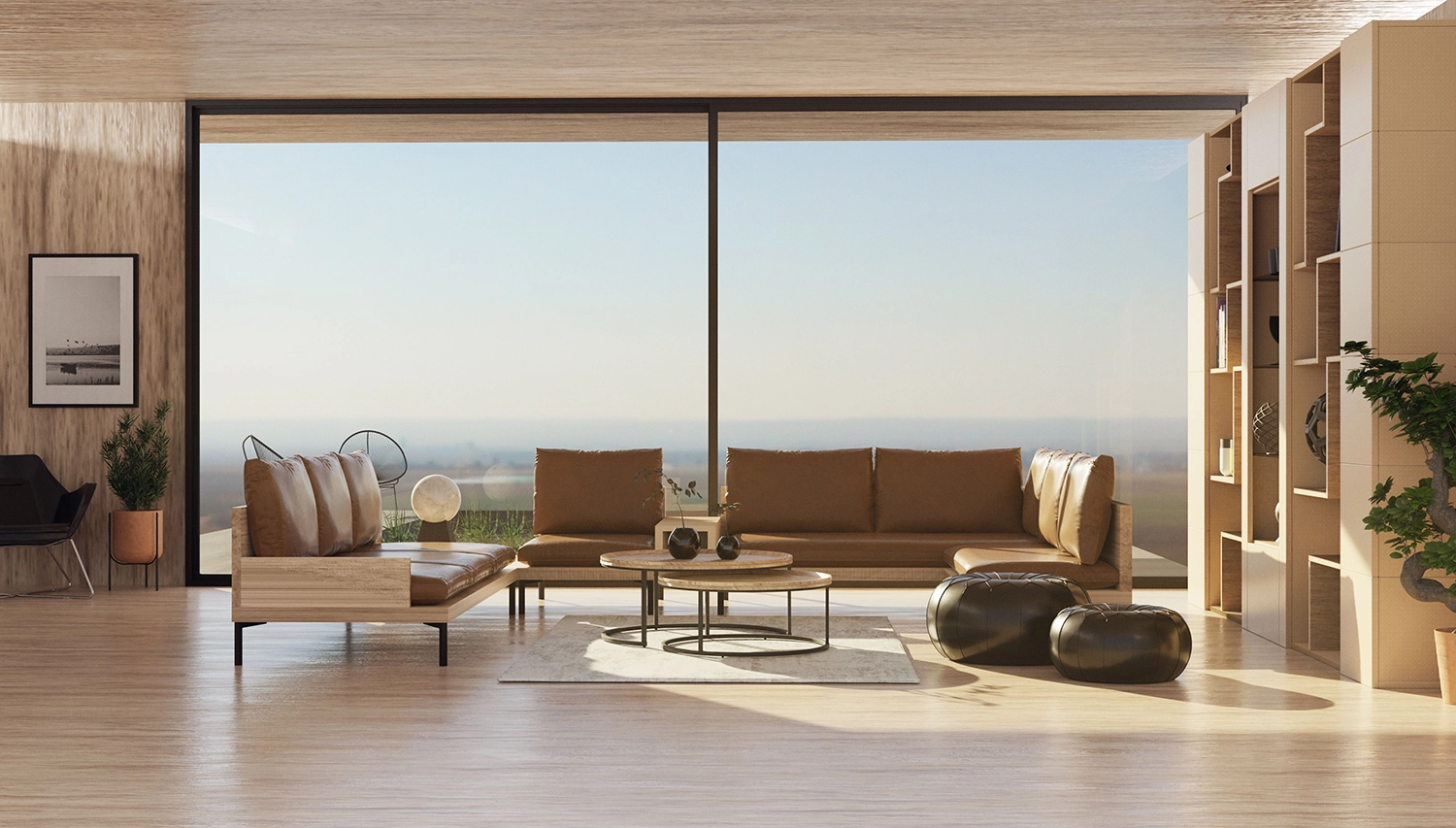
Desert modern grew out of the mid-century desert architecture of the Southwest — the Palm Springs lineage — updated for how people live now. The whole idea is to frame the landscape rather than shut it out: low horizontal lines, walls of glass, and a palette pulled straight from the terrain. In Las Vegas that logic pays off twice, because warm, earthy neutrals soften the harsh light instead of bouncing it around the room. The one thing to watch is temperature: push the palette too cool or too white and the calm tips into stark, so keep the tones warm and let natural materials carry the texture. Done right, it’s the closest thing Las Vegas has to a signature look, and it dates more slowly than almost anything else here.
The feel: quiet, edited, pared back — calm, not clinical.
Palette: creamy neutrals, soft greige, warm white, natural linen.
Materials: oak, plaster, wool and linen, honed stone — matte and tactile, never glossy.
Best for: people who love order and open space but bounced off cold, all-gray minimalism.
Where it fits: new builds and high-rises across the valley.
Budget tier: mid; the discipline is in restraint and editing, not square footage.
Warm minimalism is minimalism with the thermostat turned up. It keeps the core discipline — clean lines, clear surfaces, generous negative space, only what earns its place — but trades the cold gray palette for warm neutrals and tactile natural materials. The point is restraint: fewer, better pieces, with room to breathe between them. That quiet is what a lot of Las Vegas homeowners want after a bright, busy day. And because so little is on display, everything shows — so this is a style that rewards editing and quality over quantity. Fewer pieces, chosen better.
The feel: the meeting point of modern and classic, done with confidence.
Palette: creams, charcoals, deep woods, with one or two grounded accents.
Materials: mixed metals, natural stone, tailored upholstery, layered textiles.
Best for: couples who disagree on modern vs. traditional — this is the truce.
Where it fits: Southern Highlands, Summerlin, Lake Las Vegas.
Budget tier: mid-to-high, depending on custom millwork.
Transitional is a deliberate blend: the comfort and proportion of traditional design with the clean lines and restraint of modern. Picture classic furniture shapes in contemporary finishes, a neutral base, and just enough warmth to keep it from feeling like a showroom. It’s forgiving because it absorbs what real life brings — an inherited piece, two people with different taste, a room that has to work for both a dinner party and a quiet Tuesday. That livability is why full-time residents lean on it, and why it holds resale value instead of locking a home into a single trend. The only real risk is playing it too safe, so give it one clear point of view — a bold stone, a strong light fixture — and it reads as designed rather than defaulted. It bends without breaking.
The feel: warm, textured, made for gathering.
Palette: terracotta, ochre, olive, warm plaster tones.
Materials: textured walls, wood beams, wrought iron, patterned tile, stone.
Best for: homeowners who entertain and want soul over sleekness.
Where it fits: Lake Las Vegas, Southern Highlands, Mediterranean-shell homes.
Budget tier: mid-to-high; artisan tile and iron add up.
This is the style a huge share of Las Vegas homes were built for — the valley is full of Mediterranean shells, with arches, stucco, and tile already in place. At heart it’s a warm, sociable look: textured plaster, terracotta, wood beams, wrought iron, and materials that feel handmade. The version that dates badly is the heavy, dark-wood old-world look from the 2000s, all weight and no light. The 2026 update keeps the texture and the arches but lightens everything around them — paler plaster, warmer woods, less ornament, more air — so it feels current instead of nostalgic. Keep the texture, lighten the hand.
The feel: clean, optimistic, architectural.
Palette: warm woods, olive, rust, mustard, black accents.
Materials: walnut, leather, brass, geometric lighting, low tapered profiles.
Best for: people who want character with restraint.
Where it fits: established and retro-influenced neighborhoods.
Budget tier: mid; statement pieces do the heavy lifting.
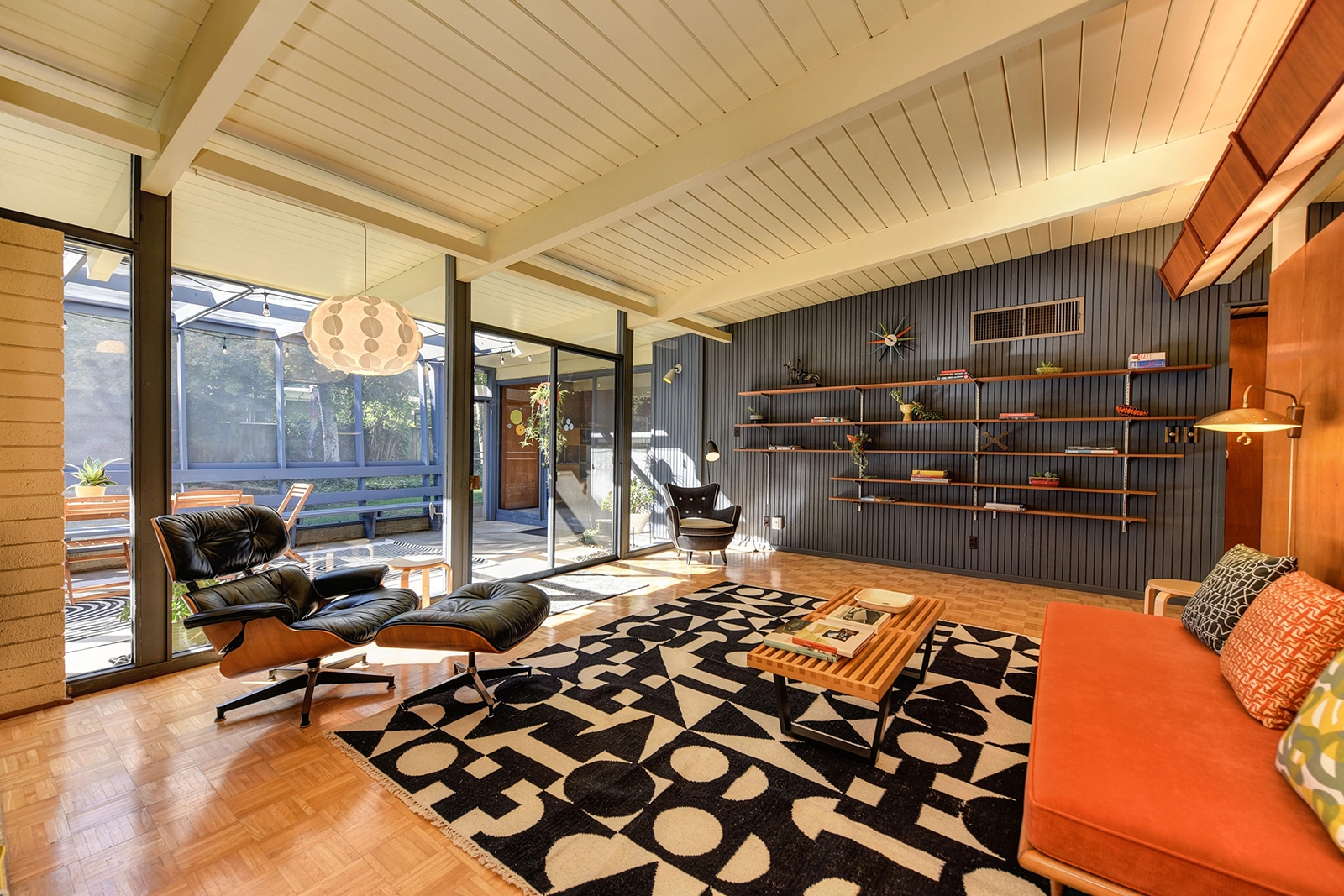
Mid-century modern comes from the 1940s–60s — clean lines, organic curves, warm woods like walnut and teak, and a functional, indoor-outdoor mindset that suits the desert naturally. Las Vegas has real roots here; the city’s mid-century heyday left behind ranch and retro homes that wear the style without forcing it. It works now because it manages to be architectural and warm at once, and because strong vintage and reproduction pieces make it easy to build a room around a few anchors. The line to walk is restraint — lean too hard on the era and a room turns into a set. Think the era, not the cliché.
The feel: warm, grounded, sculptural — nature brought indoors.
Palette: warm whites, oatmeal, clay, soft browns, muted green.
Materials: rich woods, plaster, natural stone, boucle and wool, handmade ceramics.
Best for: homeowners who want warmth and calm with real character, not a bare box.
Where it fits: new builds and full-home remodels across the valley.
Budget tier: mid-to-high; custom millwork and natural materials carry cost.
Organic modern is where clean modern structure meets the warmth and imperfection of the natural world. Where minimalism strips a room back, organic modern layers it up — curved and sculptural forms, tactile materials, and a mix of textures that make a space feel collected rather than empty. Think rounded sofas, grained or live-edge wood, plaster walls, and one or two sculptural pieces that hold the eye. It’s one of the strongest directions in 2026 because it delivers luxury that feels warm and human instead of cold, and it wears the desert light beautifully. The trick is balance: enough texture to feel rich, enough restraint to keep it from looking busy.
Here's the one that trips everyone up. Modern refers to a specific historical movement — mid-century, clean lines, warm woods, a fixed vocabulary. Contemporary means right now — it shifts with the times and borrows freely, mixing steel, stone, and softer elements. In practice: modern is a defined style; contemporary is a moving target. Most Las Vegas homes described as "modern" are actually contemporary.
If you’re starting from a blank slate — a brand-new home, whether that’s a full custom build or a production home you can still influence — you have leverage most remodelers don’t. Design decisions made before framing and mechanical work are dramatically cheaper than changes made after.
The highest-impact early choices are the same either way: window placement and glazing (this sets how the desert light behaves in every room), ceiling heights and sightlines, where the indoor-outdoor transitions live, and a real plan for built-in storage. This is exactly where custom home interior design earns its fee — cabinetry, lighting layout, and material transitions get locked in early and are far harder to change once they’re built.
The move: settle the style direction before you finalize the floor plan, not after.
Renovating an existing Las Vegas home is a different game. You’re working with what’s there — and often uncovering surprises behind the drywall.
Practical house renovation interior design ideas that carry the most weight: reworking the palette and lighting first (the fastest way to shift a room’s whole feel), replacing dated flooring with desert-appropriate materials, opening or clarifying sightlines where the structure allows, and
upgrading the kitchen and primary bath, which drive both daily experience and resale. If you’re phasing the work, start with the kitchen or primary suite — they deliver the most return on both fronts. And if you’re opening walls in an older home, plan a contingency for electrical and plumbing that today’s codes won’t overlook.
Where your home sits should shape the style — for architectural fit, for resale, and sometimes for approval. Many luxury communities run an architectural review committee, and HOA guidelines can limit exterior and even some visible interior choices. Check yours before you finalize anything.
Neighborhood / area
Typical home
Styles that tend to fit
Summerlin, The Ridges
Modern custom, glass,desert views
Desert Modern, Warm Minimalism
Ascaya, MacDonald Highlands
Hillside luxury custom
Desert Modern, Contemporary, Organic Modern
Southern Highlands
Mediterranean &transitional shells
Luxe Transitional, Modern Mediterranean
Lake Las Vegas
Mediterranean, lakeside
Modern Mediterranean, Coastal-Organic, Transitional
Strip high-rises
Condos, panoramic views
Contemporary, Warm Minimalism, Organic Modern
Established valley neighborhoods
Ranch, retro builds
Mid-Century Modern, Transitional
Blending is where "personal" turns into "chaotic" if you're not careful. A few working rules:
• Pick one lead style and one supporting style — not three. The lead sets the palette and materials; the support adds accents.
• Repeat materials to create cohesion. If brass appears once, let it appear a few times. One-off finishes read as mistakes.
• Keep the permanent things calm, and let the personality live in the changeable things — art, textiles, lighting, and accessories.
• Don't mix more than two wood tones or two metals without a deliberate reason.
Transitional style is essentially this disciplineformalized, which is why it's the easiest path if you're unsure.
This is the part almost no one covers well, and it's where projects quietly go wrong. Las Vegas hands your interior four specific challenges: relentless UV, real heat, fine dust, and very low humidity. Choose materials that respect all four.
Element
Desert challenge
What performs
What to watch
Flooring
Heat, low humidity
Porcelain tile, luxury vinyl plank, engineered wood
Solid hardwood can gap and warp in dry air
Window treatments & textiles
UV fade
Solution-dyed and performance fabrics, UV-rated
Untreated silks and bright dyes fade fast
Wood furniture & millwork
Low humidity
Acclimated or engineered wood, stable joinery
Large solid slabs can crack over time
Metals & hardware
Dust visibility
Matte and brushed finishes
High-polish and mirror finishes show every speck
Indoor-outdoor surfaces
Direct sun
Fade- and heat-rated stone, pavers, finishes
Standard indoor materials degrade at the threshold
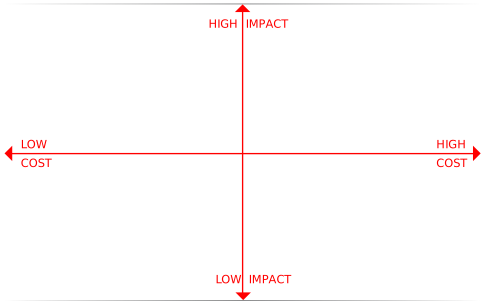
The rule of thumb: in the desert, performance is part of good design. A finish that looks perfect for one summer and tired by the next was the wrong choice, however beautiful the sample.
Choosing a style is the fun part. Living through the project is the part people underestimate — so here’s what a full-home design project actually involves, start to finish, so you know what you’re signing up for before you commit:0
- Discovery — how you live, what you want the home to say, your real budget.
- Concept & direction — the style, palette, and materials, agreed before anything is ordered.
- Design development — layouts, selections, and specifications, room by room.
- Sourcing & procurement — ordering, tracking, and managing lead times.
- Build & installation — coordination of trades, sequencing, site management.
- Styling & finish — the final layer that makes a house feel finished.
Timelines vary with scope, but a full-home design-and-renovation project commonly runs several months from concept to move-in. The real difference in how that time feels comes down to coordination —
one team guiding decisions, catching conflicts before they’re built, and managing the trades — so you get to make choices, not chase them.
That’s the whole idea: you decide the vision; someone else carries the weight of executing it.
Take a Henderson home we fully reimagined. The direction was modern luxury: a custom kitchen anchored by a quartz island and sleek European flat-panel cabinetry, paired with spa-inspired bathrooms finished in oversized Italian porcelain. The primary suite and main living areas were reworked around how the owners actually live — comfort first, drama where it counts.
In a project this size, the question isn’t how little you can spend — it’s where the money actually matters. The principle is simple: invest in what’s permanent and disruptive to change; stay flexible on what’s easy to swap later.
Worth investing in (permanent, expensive to redo): flooring, cabinetry, countertops and stone, plumbing and lighting layout, windows and glazing. Get these right once.
Where you can stay flexible (easy to update): paint, textiles, hardware, decorative lighting, and accessories. These let you refresh the look in a few years without touching the bones.
Below are general 2026 ranges for the Las Vegas market. Treat them as planning numbers, not quotes — your real figure depends on your home, size, and selections, and a written line-item estimate is the only way to know.
Scope (Las Vegas, 2026)
Typical range
Full-home interiorrenovation
$60,000 – $150,000+
Full gut / high-endwhole-home
$150,000 – $500,000+
Luxury renovation, per square foot
~$100 – $208+/sq ft
High-end kitchen
from ~$60,000; $250 – $500+/sq ft
Primary bathroom suite
$40,000 – $80,000+
Secondary bathroom
$15,000 – $35,000
Quality flooring, installed
~$8 – $20+/sq ft (material-dependent)
Design fee
commonly a % of project or hourly