how to choose a reliable remodeling contractor in Las Vegas: 10 questions to ask
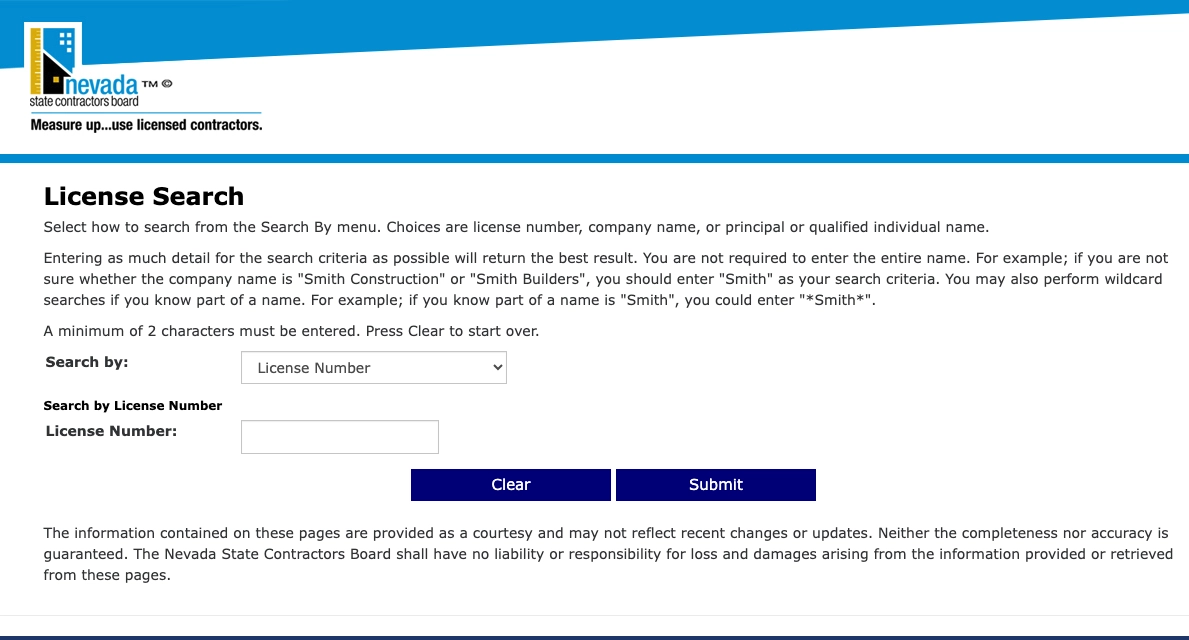
Before you sign anything, do one thing: look up the contractor on the Nevada State Contractors Board (NSCB) and confirm two fields — that the license status reads Active, and that the monetary limit printed on it is higher than what your project will cost. That single check screens out most of the risk in hiring a remodeler here.
Then set your budget expectation. In the Las Vegas Valley in 2026, a full-home remodel typically runs $60K to $250K+, with cosmetic refreshes starting around $15K and high-end whole-home projects moving well past $250K (verify current local figures before you commit — material and labor costs move). If you know your license status, your monetary limit, and your realistic range, you already understand more than most homeowners do on day one.
A bad hire doesn't just cost money. It costs months, and a house you can't live in while you fight about it.
The rest of this guide gives you the 10 questions to ask a remodeling contractor, what a good answer sounds like, and the Nevada-specific details national checklists leave out.
first, verify the license
Nevada is stricter than most states about who can swing a hammer for pay. Any residential job involving labor and materials over $1,000 requires an NSCB license — one of the lowest thresholds in the country. There's effectively no "small job" exemption, and the Board runs undercover sting operations against unlicensed work. So verification isn't a formality here. It's the whole ballgame.
the 3-check NSCB verification: classification + sub-class + monetary limit
Look the contractor up in the NSCB's online license search, and check three things on their record:
Status. It must say Active. Suspended, Expired, Revoked, or Inactive all mean the license does not currently authorize work. In Nevada, a suspension often signals an unpaid Recovery Fund judgment, a lapsed workers' comp policy, or an unresolved disciplinary matter — exactly what you want to know before you hire.
Classification and sub-class. The license type must match your work. A contractor licensed for one trade isn't automatically cleared for a full-home remodel that touches structure, electrical, plumbing, and HVAC.
Monetary limit. This is the field almost nobody checks — and the one that matters most on a large project.
why the monetary limit decides whether a contractor can even take your project
Nevada is one of the few states that prints a contract-value ceiling directly on every license. The Board sets that limit based on the contractor's financial statement, and it comes in bands — roughly up to $25,000, $25,000–$500,000, $500,000–$1 million, and unlimited.
Here's the part that changes how you shop: if your remodel costs more than the contractor's monetary limit, they legally cannot take the job at that price. A $300K whole-home project handed to a contractor with a $150K limit is a problem before demolition starts.
Check the number. It quietly tells you whether a firm operates at your project's scale.
the residential recovery fund — your financial backstop
Nevada maintains a Residential Recovery Fund (NRS 624.400–624.560), funded by assessments every licensed residential contractor pays. If an owner-occupant of a single-family home is financially harmed because a licensed contractor failed to perform, and other remedies have been exhausted, the Fund can compensate actual damages — up to roughly $40,000 per claim (published caps have varied; verify the current figure on the NSCB site). Claims generally must be filed within four years of the work being completed.
Two things to take from this. First, the protection exists only when you hired a licensed contractor — another reason verification comes first. Second, a contractor is required to notify you in writing of your rights under the Fund. If they don't, that tells you something.
the 10 questions to ask a remodeling contractor in Las Vegas
Use these on every consultation. Ask them plainly, and write down the answers so you can compare later.
1. are you licensed with the NSCB — and does your monetary limit cover my project?
Why it matters: it confirms both legality and scale in one question. A good answer: they give you their license number without hesitation, tell you their classification, and know their monetary limit off the top of their head — because they think in those terms every day. 🚩 Red flag: vagueness about the number, or "we don't really need a license for work like this."
2. are you fully insured (general liability + workers' comp)?
Why it matters: without workers' comp, an injury on your property can become your financial responsibility. General liability covers damage to your home. A good answer: they carry both and will have their insurer email you a certificate of insurance directly. Reputable firms expect this request. 🚩 Red flag: they offer to "add you as additional insured later," or push back on providing a certificate.
3. have you completed full-home remodels like mine in the Las Vegas valley?
Why it matters: a contractor who mostly does single bathrooms may not be built for a whole-home project — and local experience means they know Valley building patterns, from 1990s tract homes to custom builds. A good answer: a portfolio of comparable local projects, and references from homeowners whose scope resembled yours. 🚩 Red flag: photos that all look like small, unrelated jobs, or work exclusively out of state.
4. do you handle design and material selections, or just the build?
Why it matters: on a large remodel, the gaps between separate designers, suppliers, and builders are where delays and finger-pointing live. A design-build firm carries one line of accountability from concept to final walkthrough. A good answer: they describe a defined process — design and renderings, help choosing finishes and fixtures, permit handling, then construction — in plain language. 🚩 Red flag: they expect you to coordinate the architect, the showroom, and the permit office yourself.
5. who's my main point of contact, and how will we stay in touch?
Why it matters: you'll have people in your home for weeks or months. You need one name, one number, and a predictable way to get updates. A good answer: a named project manager, a stated response time, and a clear way you'll get updates as the work moves. 🚩 Red flag: "just text whoever's on site," or no clear owner of your project.
6. will you pull all permits and handle my HOA approval?
Why it matters: in Nevada, the party who pulls the permit answers to the inspector. Under recent state law, your contractor is the one who should be pulling them. And in most Las Vegas master-planned communities, HOA architectural approval is a separate hurdle with its own timeline. A good answer: they pull every required permit for the City of Las Vegas, Clark County, or Henderson as applicable, and they've navigated HOA submittals in communities like yours. 🚩 Red flag: they ask you to pull the permits — often a sign they're avoiding inspection or aren't in good standing.
7. what's a realistic timeline for a project like mine?
Why it matters: a contractor juggling too many jobs at once will stretch your timeline too... A good answer: an honest phase-by-phase schedule (with the caveat that it firms up once the design is final), and a straight answer about whether they have the crew to keep your job moving. 🚩 Red flag: a suspiciously fast promise with no phases behind it, or dodging questions about their current workload.
8. how do you structure the deposit, contract, and payment schedule?
Why it matters: payment structure protects you. It's also where Nevada law is specific. A good answer: a modest, lawful deposit, then payments tied to completed milestones, with a written contract that spells out scope, dates, total price, warranty, and NSCB contact information. 🚩 Red flag: a demand for a large payment up front, or for everything before work begins.
9. how do you handle change orders and unforeseen conditions?
Why it matters: older homes hide surprises behind walls — outdated wiring, water damage, non-code framing. How a contractor handles the unexpected separates the professionals from the improvisers. A good answer: a written change-order process with your approval required before extra work proceeds, and honesty that some surprises are possible while others are avoidable with good planning. 🚩 Red flag: "we'll sort out the money later," or change orders handled verbally.
10. what warranty do you offer — and what happens if something fails later?
Why it matters: finished work sometimes needs correcting. A warranty tells you they stand behind it. A good answer: a clear workmanship warranty (commonly around a year, sometimes longer), plus the manufacturer warranties on materials, and a simple process to call them back. 🚩 Red flag: no warranty, or a warranty that lives only in a conversation, not the contract.
Las Vegas–specific factors most guides miss
National checklists stop at "licensing varies by state" and move on. That vagueness is exactly where Las Vegas homeowners get caught out. Nevada runs some of the strictest contractor rules in the country, the Valley splits permitting across four separate jurisdictions, and the desert climate changes what a remodel actually has to account for. Here's what applies here that a generic, out-of-state guide will never tell you.
permits across the valley: which jurisdiction governs your address
Which office you deal with depends on where the home actually sits, not on the mailing address — a “Las Vegas, NV” address can fall inside the City of Las Vegas or in unincorporated Clark County. Homes in Las Vegas, Henderson, North Las Vegas, and unincorporated Clark County each go through a different building department, each with its own review times and fees (verify current fees and timelines with the relevant department). Your contractor should know which jurisdiction governs your address and should pull the permits themselves. If your project touches structure or systems, plan on inspections at defined stages — that's normal and protects you.
deposit & contract rules under Nevada's AB 39 (2023)
Most online guides tell you a 10–30% deposit is standard. In Las Vegas, following that advice can cost you. Under AB 39 (2023), a residential improvement deposit is capped at the lesser of $1,000 or 10% of the contract price — unless the contractor has posted a $100,000 consumer-protection bond (confirm the current rule and any updates against the live statute). On a $200K remodel, "30% down" would be far outside that cap. A contractor asking for it either doesn't know the law or is hoping you don't. The same law requires specific disclosures in every residential contract: scope of work, start and end dates, total price, payment schedule, warranty terms, NSCB contact information, and notice of the Residential Recovery Fund. A contract missing required elements is voidable by you. And the contractor — not you — must apply for the permits.
desert-climate realities: HVAC, materials, and outdoor living
Las Vegas remodels carry considerations a Midwest checklist never mentions. HVAC has to be sized for extreme summer heat, and system placement matters. Some finishes and exterior materials hold up better under intense UV and temperature swings than others. And outdoor living — covered patios, pools, shade structures — is often part of a full-home scope here rather than an afterthought. Ask whether your contractor designs for the climate or just builds to the drawing.
how to compare the bids you get: checklist and a comparative table
Gather at least three bids, and make sure each one covers the same scope so you're comparing like for like. The lowest bid isn't automatically the best — a number well below the others often means something was left out or misunderstood.
Las Vegas contractor-vetting checklist
Print this and take it to each consultation:
3-contractor scorecard
Enter the contractor names, rate each one from 1–5 on every criterion, and print the scorecard if needed:
Criteria
Contractor A
Contractor B
Contractor C
Total
0
0
0
A quick example: Say you're remodeling a 3,200 sq ft home in Summerlin, budget around $220K. Contractor A bids $185K but has a $150K monetary limit — off the table, since the price exceeds the license cap. Contractor B bids $205K, pulls permits, handles the HOA submittal, and lays out allowances line by line. Contractor C bids $168K but wants 25% down and asks you to pull the permits. On the scorecard, B wins on nearly every row — and the "cheapest" bid was the riskiest. (Composite scenario for illustration.)
red flags: when to walk away
Any one of these is a reason to stop:
• No NSCB license, or a status that isn't Active. • A monetary limit below your project value. • A deposit demand above Nevada's AB 39 cap, or a request for full payment up front. • Pressure for you to pull the permits. • No written contract, or one missing required disclosures. • Change orders handled verbally. • Cash-only, no paper trail. • Reluctance to provide a certificate of insurance or references.
faq
how do I find a reliable remodeling contractor in Las Vegas?
Start on the NSCB Contractor Listing Search, confirm an Active license with a monetary limit above your project cost, then interview at least three and compare them on the same scope using a scorecard.
how much does it cost to remodel a house in Las Vegas in 2026?
Full-home remodels typically run $60K–$250K+, with luxury gut projects moving past $250K. Cosmetic refreshes can start near $15K. Verify current pricing against real bids for your scope.
what's the biggest mistake homeowners make when choosing a contractor here?
Skipping the monetary-limit check. A contractor can be licensed and still be legally barred from taking a project that exceeds their license cap.
how much deposit can a contractor ask for in Nevada?
Under AB 39, a residential deposit is generally capped at the lesser of $1,000 or 10% of the contract price unless the contractor has posted a $100,000 consumer-protection bond. Confirm the current rule before you pay.
who pulls the permits — me or the contractor?
Your contractor should. Under Nevada law they're responsible for applying for permits on residential improvement work, and the party who pulls the permit answers to the inspector.
how long does a full-home remodel take?
Plan on roughly four to nine months for a whole-home project, depending on design time, permitting, and scope.