Most homeowners assume a gorgeous new kitchen is the smartest money they can spend. The data disagrees. Understanding home remodel ROI — how much of what you spend actually comes back when you sell — is what separates a renovation that builds wealth from one that quietly drains it.
The short version, before the numbers:
• On pure percentage return, the exterior wins. A garage door and a front door beat almost every interior project.
• Kitchens and bathrooms pay off when you keep them restrained. A focused refresh recoups far more than a full gut.
• Averages aren't your answer. Where you live, what your neighbors' homes sell for, and whether you're selling at all can each rewrite the math.
Now the details, including the part almost no other guide covers: what any of this means if you're renovating a Las Vegas home you actually plan to live in.
Return on investment for a renovation is a ratio. Take the resale value a project adds, divide it by what the project cost, and you get a percentage.
Spend $28,458 on a minor kitchen update that lifts your home's appraised value by roughly $32,100, and your ROI lands near 113%. You got back more than you put in, which is rare for an interior project. (We'll come back to why this particular remodel manages it.) Those figures aren't invented for the example: they're the national averages for a minor kitchen remodel in Zonda's 2025 Cost vs. Value Report.
A project at 70% means you recouped seventy cents on the dollar at resale. That isn't a loss, exactly. You lived with the improvement, you enjoyed it, and you got most of the money back on the way out. But it isn't the same as an investment that pays for itself.
This is where the standard advice falls apart, and where most articles stop thinking.
Every ROI ranking online measures one thing: recouped value at resale. It's built for sellers. If you're listing in six months, that ranking is your bible.
Plenty of people, though, remodel a home they have no intention of leaving. For them, a 42% "ROI" on an upscale primary bath isn't a failure. It's the price of a decade of morning showers in a room they love. Call it livability ROI: the return measured in daily life rather than on a closing statement. A soaking tub, a wider island, a wine room — these lose money on a spreadsheet and win on a Tuesday night.
So before you weigh any project, answer one question. Are you renovating to sell, or renovating to stay? The right choice flips on that answer.
When people ask which renovation delivers the best return, they're usually reaching for one dataset without knowing its name. The most-cited source in this whole conversation is Zonda's Cost vs. Value Report, an annual national study that pits typical project costs against the resale value appraisers assign them. The most recent full edition is the 38th annual report, released in September 2025. At the top of its table, a new garage door recoups roughly 268% of its cost, a steel entry door about 216%, and manufactured stone veneer around 206%.
Project
Avg. cost
Resale value added
ROI
Garage door replacement
$4,672
$12,526
267.7%
Steel entry door replacement
$2,435
$5,270
216.4%
Manufactured stone veneer
$11,702
~$24,320
207.9%
Fiber-cement siding
$21,485
~$24,420
113.7%
Minor kitchen remodel
$28,458
$32,141
112.9%
Vinyl siding
$17,950
~$17,320
96.5%
Backup power generator
$13,534
~$12,900
95.3%
Wood deck addition
$18,263
~$17,320
94.9%
Composite deck addition
$25,096
~$22,200
88.5%
Midrange bath remodel
$26,138
$20,910
~80%
Three of the four best returns are exterior projects, and none of them costs more than $12,000. The garage door alone, the least glamorous line item imaginable, added over twelve thousand dollars in resale value on a sub-$5,000 spend. It's the highest-ranked project in the report for the second year running.
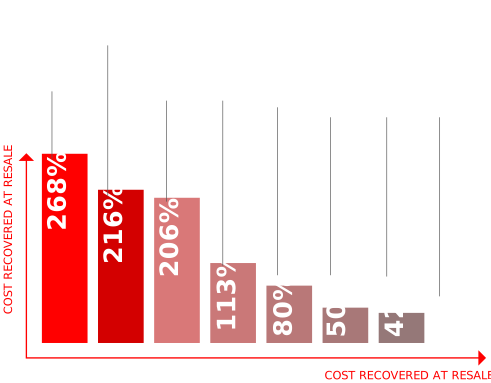
Home remodel ROI by project (2025):
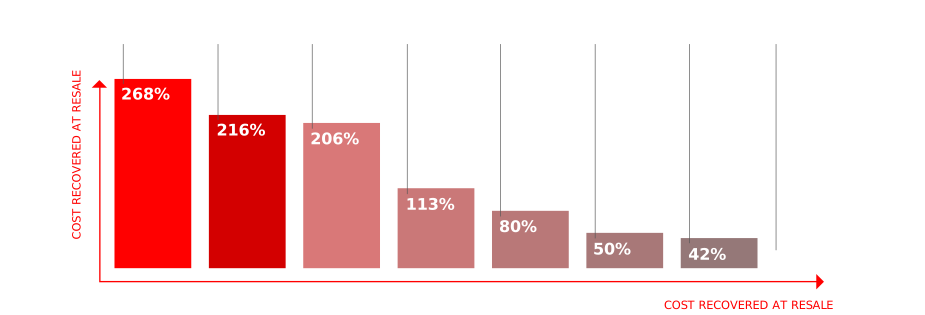
The projects people actually fantasize about live near the bottom. An upscale kitchen overhaul recoups roughly half its cost. A primary-suite addition, less. Pools can go negative.
You've probably noticed different articles quoting wildly different figures for the same project. One site says garage doors return 194%. Another says 268%. A third says 349%. All three can cite "the Cost vs. Value Report" with a straight face.
Three things explain the mess.
Report year comes first. The 194% figure is the 2024 edition; 268% is 2025. Pages that never updated, or that mislabel an old number as current, keep the stale figure alive.
Different datasets come second. Zonda's report uses contractor and appraiser estimates.
The National Association of Realtors runs its own remodeling survey and puts a minor kitchen closer to 96% cost recovery. Agent surveys from firms like HomeLight ask working Realtors what they see on the ground. One question, three methodologies, three answers.
Editorial spin comes third. Some sites quietly round, average, or cherry-pick to prove a point. A window company's blog will always find a way to make windows look great.
The fix is simple: check the report year and the source before you trust a percentage. If a page won't tell you either, don't build a budget on it.
Numbers in a table are one thing. Knowing why they behavethat way tells you where your own dollars belong.
Buyers form an opinion of a house within seconds of pulling up, long before they step inside. That's the whole story behind exterior ROI. A dated garage door, a scuffed front entry, tired siding — each one shaves a little off the number in a buyer's head before the tour even starts.
Replacing them is cheap relative to their visual weight. A standard insulated steel garage door in a style that suits the architecture. A 20-gauge steel entry door with a solid lockset. Manufactured stone veneer across the lower third of the front facade. None of these require touching the interior, and every one of them reads as "this home is cared for."
The counterintuitive part: a minor kitchen remodel returns about 113%. A major one returns roughly half that.
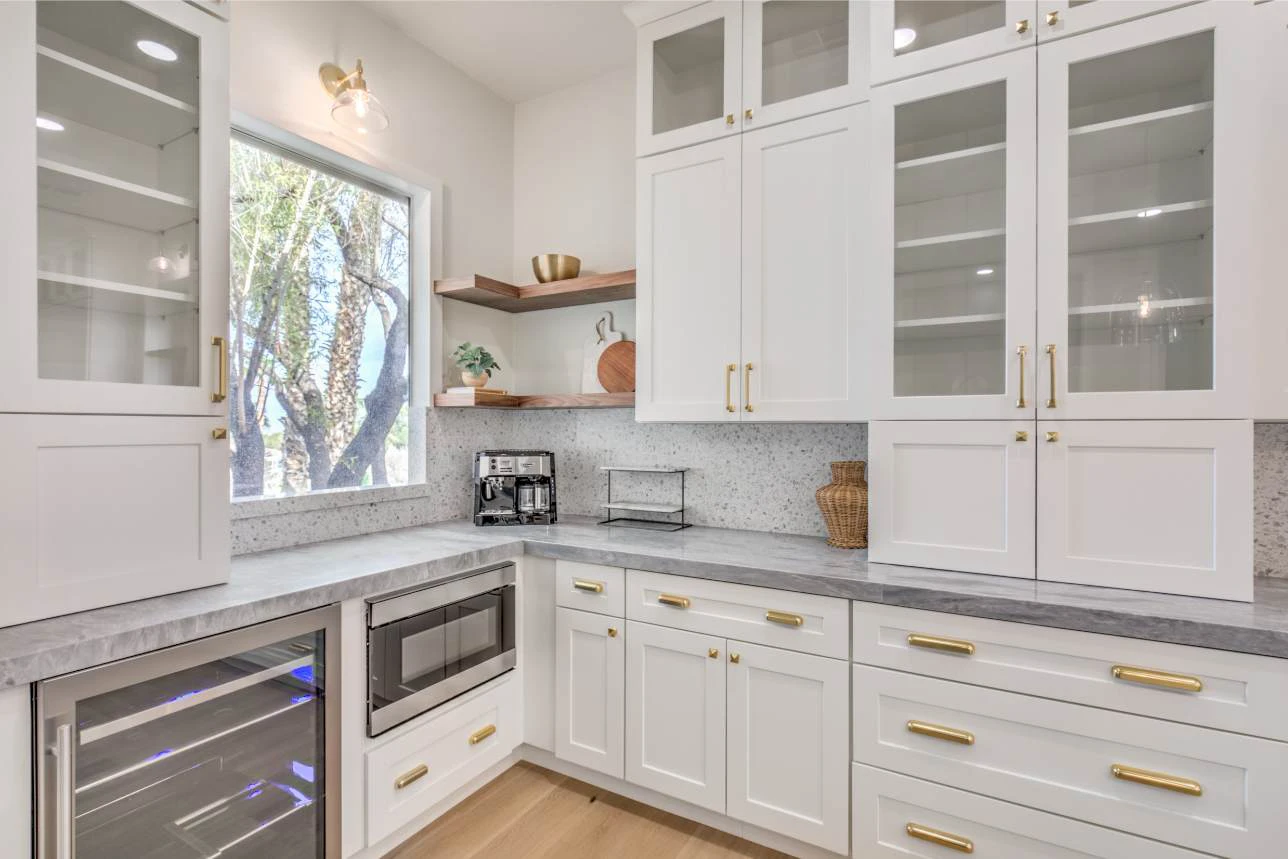
The minor version keeps your existing cabinet boxes and refaces the doors and drawer fronts, swaps in new countertops, updates the sink and faucet, refreshes the flooring, and installs mid-grade appliances. Clean, current, functional. That's what buyers pay for.
The major version tears out the layout, installs custom cabinetry and high-end appliances, and can run past $80,000. Buyers rarely reimburse that, which brings up the single most important rule in this entire article: the comp ceiling. Your neighborhood's recent sale prices set an invisible cap on what your home can appraise for. Drop a $90,000 chef's kitchen into a $400,000 neighborhood and the market simply won't pay it back. Match your finish level to your street, not to your Pinterest board — unless resale isn't the point, in which case build the kitchen you want.
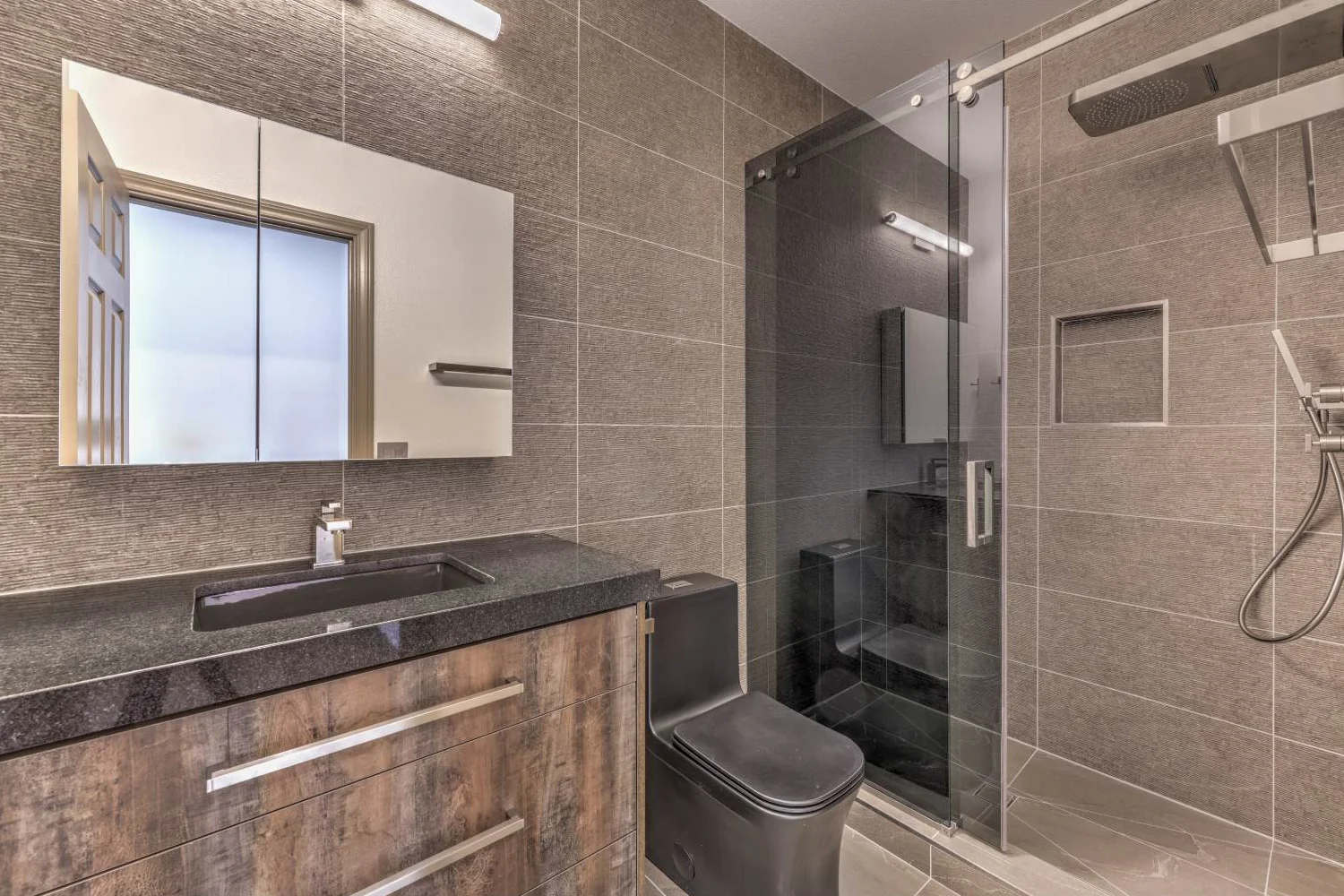
Bathrooms follow the kitchen's logic. A midrange remodel — new tub or shower surround, toilet, vanity, and flooring, all within the existing footprint — lands around 80% ROI, the strongest of any bath category. Push into an upscale version with a steam shower, freestanding tub, and radiant-heat floors, and the return slides toward 42%.
One quiet exception is worth knowing. A universal-design remodel, with a walk-in shower, grab bars, and wider doorways, sits around 61% and appeals to a widening slice of buyers as the population ages. And if your home is under-bathed for its bedroom count, adding a bathroom outright can deliver the biggest absolute-dollar gain of any project here, even when the percentage looks unremarkable.
National averages are a starting point, not a quote. The Cost vs. Value Report is built from data across hundreds of markets, and a figure that holds in the Midwest can drift by the time it reaches the Mojave.
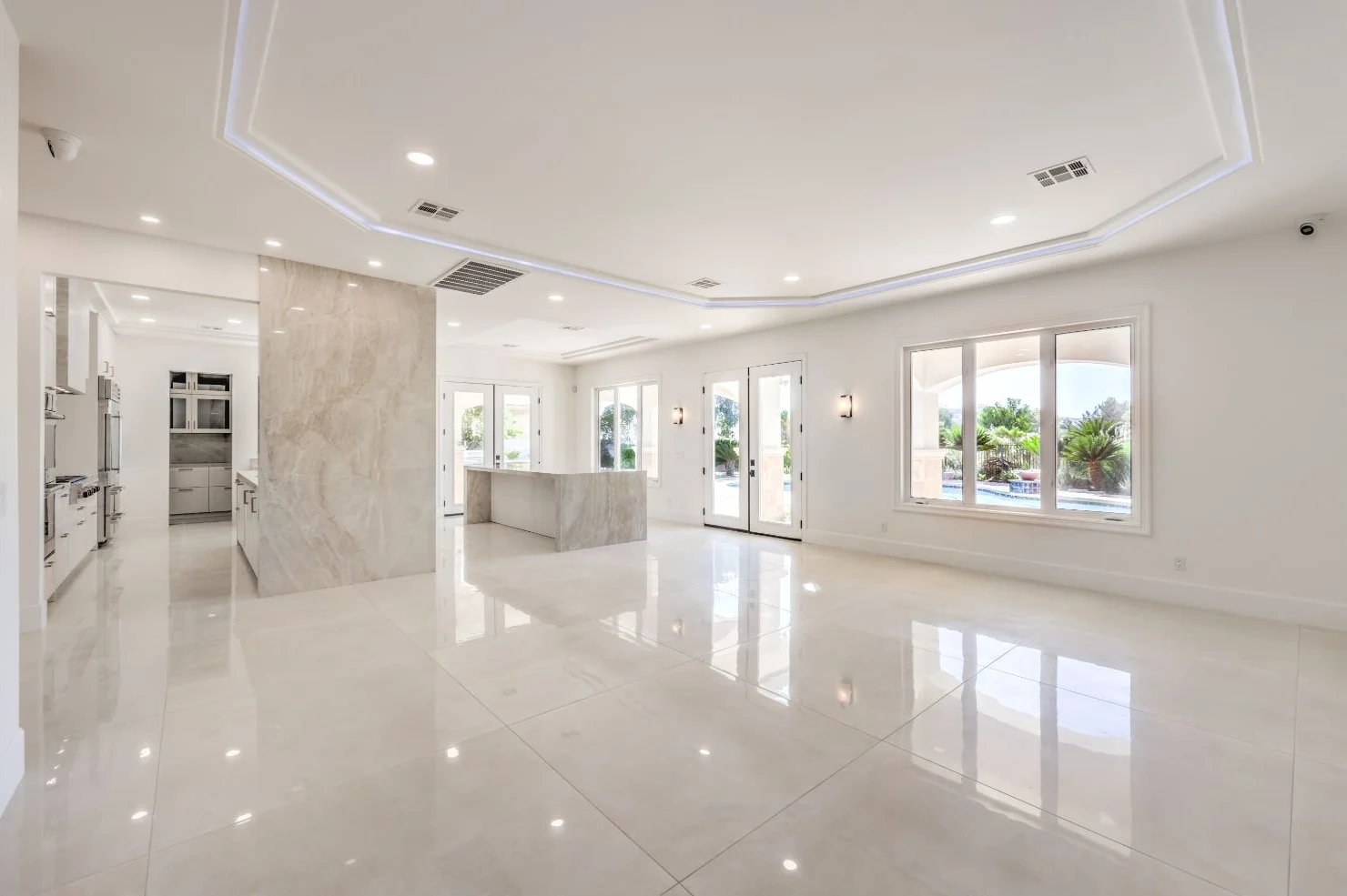
A few Las Vegas-specific factors move the needle. Permitting runs through Clark County and the individual municipalities, and those timelines shape project schedules more than most homeowners expect. Many of the valley's established neighborhoods — the older pockets off Desert Inn, the mature streets east of the Strip — still carry builder-grade finishes from their original construction. The "before" state is genuinely dated, which makes the value lift from a smart refresh real.
Climate matters too. Desert sun and heat are hard on exterior materials, so siding, stone veneer, and finishes rated for UV and temperature swings earn their keep here in a way they might not in a mild coastal market. A garage door baking on a west-facing wall through a Las Vegas July is doing more work than its national cost figure suggests.
In master-planned communities like Summerlin, Henderson, and the newer Anthem developments, HOA design review is part of the equation. Exterior changes often need approval, and finishes that align with community standards protect resale. Buyers in these areas also treat a certain level of interior finish as the baseline, which raises the comp ceiling and lets upscale interior work pencil out better than it would elsewhere in the valley. In a luxury-tier Summerlin home, a high-end kitchen isn't over-improvement. It's the market expectation. In a metro this segmented, a single ROI figure isn't one number. It's a different number on every street.
Some projects are a joy to own and a loss to sell. Knowing which is which saves you from an expensive surprise at closing.
Pools top the list of polarizing choices. Installing one runs $40,000 to well over $100,000, and in many markets appraisers add only a fraction of that, sometimes nothing, since a share of buyers see a pool as a maintenance burden or a safety worry. Las Vegas is friendlier to pools than most metros, given the climate, but even here a full return is no guarantee.
High-end finishes in a mid-priced neighborhood run into the comp ceiling every time. Sunrooms and room additions convert expensive square footage that buyers rarely value one-for-one. And the deeply personal touches — a home theater with custom acoustics, a wine cellar, a bold accent wall in a color only you love — carry value to exactly one person: you. Which is completely fine, as long as you spend that money knowing it's for living, not for resale.
Set the national table aside for a minute and run the number for your actual house.
- Start with a real cost, not a showroom guess: a scoped estimate from a contractor for the specific work you want. That figure is your denominator.
- Then find your comps. Pull three or four recent sales of similar homes in your neighborhood, ideally some with the improvement you're considering and some without. The price gap between them hints at what the market pays for it.
- From there, estimate the value lift. Compare the "with" and "without" comps to gauge how much appraised value the project realistically adds, and be conservative: buyers discount for problems more readily than they pay premiums for upgrades.
- Finally, divide and sanity-check. Value added over cost gives your ROI. Test it against the comp ceiling — if the finished home would price above anything that's ever sold on your street, trim your expectation.
Run this once and the abstract percentages start to mean something. You'll often find the modest project beats the dramatic one, which is the whole lesson of the Cost vs. Value data in miniature.
What you tackle first depends heavily on what you have to spend.


Tier 1: $15,000 Budget
Tier 2: $40,000 Budget
Tier 3: $75,000+ Budget
Focus on first impressions and deferred maintenance including garage doors, steel entry doors, fresh neutral paint, and fixing inspector-flagged items.
Perform a light refresh while keeping the footprint, such as minor kitchen or bathroom updates, refacing cabinets, and updating fixtures.
Choose between spreading funds across high-return projects for selling or performing a full whole-home renovation for long-term living.

Around $15,000. Aim it at first impressions and deferred maintenance: a garage door, a steel entry door, fresh neutral paint, and anything an inspector would flag, from a leaky faucet to a struggling HVAC. Every dollar spent closing a buyer objection is worth several at the negotiating table.
Around $40,000. Now you can add a minor kitchen refresh or a midrange bath, holding the existing footprint in both. Reface cabinets rather than replacing them. Update counters, fixtures, and lighting. Resist the urge to move plumbing or gas lines, which is where budgets quietly double.
$75,000 and up. At this level the strategy forks on that one question again. Selling soon? Spread the money across the highest-return projects and stop before the comp ceiling. Staying for years? This is where a full-cycle, whole-home renovation makes sense: the kind where design, materials, and construction move together toward a home built for how you actually live.
If you're staying put, the entire framework changes, and honestly it gets more freeing.
A homeowner planning a decade in the same house isn't optimizing for a future buyer's taste. They're optimizing for their own mornings, their own dinners, the way light moves through a room they'll see thousands of times. The upscale kitchen that "only" returns 51% at resale returns something a spreadsheet can't score across ten years of use.
The real trap for this homeowner isn't over-improving. It's fragmentation: a big renovation done piecemeal, with a contractor here, a designer there, a countertop vendor you found yourself, all of it landing on your calendar and your stress. A full design-build approach, where 3D renderings, material selection, and construction run under one roof, exists precisely to remove that coordination burden. You make decisions once, with people who own the outcome end to end, instead of refereeing between trades who each blame the other.
That's the version of return that never shows up in the Cost vs. Value Report: the return of getting the home right the first time, without the project eating your year.





.png)